Extension Developers Sell The Data of At Least 6.5 Million Users – And It’s All Completely Legal
Executive Summary:
New research by LayerX Security uncovers multiple networks of browser extensions that collect user data and resell it for profit – and it’s all completely legal. For, unlike malicious extensions that disguise themselves as legitimate extensions and do their bidding in the dark, these extensions explicitly tell users that they’re going to collect and sell their data. It’s right there in the Privacy Policy; except that nobody reads it.
LayerX analyzed the privacy policies of thousands of extensions and uncovered over 80 different extensions that collect and sell customer data. Some of these extensions include:
A network of 24 media extensions that are installed on 800,000 users and collected viewing data and demographic information on major streaming platforms such as Netflix, Hulu, Disney+, Amazon Prime Video, HBO, Apple TV, and others
12 separate ad blockers with a combined install base of over 5.5 million users openly selling user data
Nearly 50 other extensions, with over 100,000 users in aggregate, that collected and resold users’ browsing data
While browser extensions may seem innocent, these findings highlight the privacy exposure that can arise from unregulated usage of extensions.
The Fine Print That Makes Everything Legal
Privacy policies. Reading them is like watching paint dry. For most users, it’s worse than reading the fine print in their mortgage agreements; and that’s saying something.
Except we did.
LayerX Security researchers Dar Kahllon and Guy Erez analyzed the privacy policies of thousands of browser extensions available in official stores. They were looking for one thing: whether the publisher explicitly reserved the right to sell user data.
And we found them. Our analysis showed at least 80 such extensions, some of them working in collusion, and developed by the same developer across all extensions. They range from ad blockers and streaming tools to job application helpers, new-tab extensions, and B2B sales intelligence platforms.
Most of these policies don’t say “we sell your data.” They say “we may sell.” It’s a legal hedge – but it means your data can be sold at any time, and you already agreed to it. Here’s what that looks like in practice:
“We may sell or share your personal information with third parties.”
“This information may be sold to or shared with business partners.”
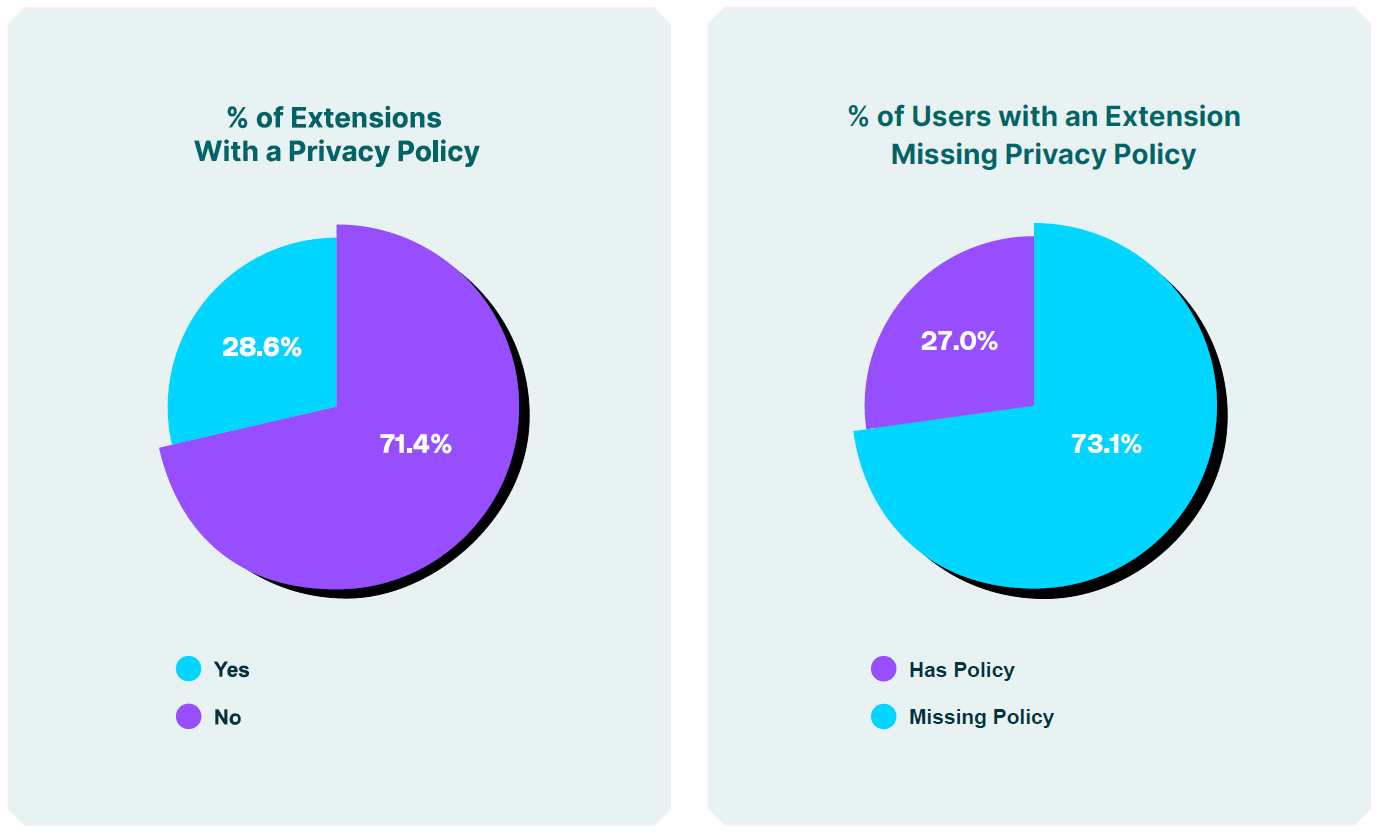
As a result, more than 73% of users have at least one extension installed without a privacy policy, with no transparency into how their data is handled. This means our analysis could only rely on the 29% that do have a privacy policy.
And if we assume that some of those extensions with no privacy policy at all will also resell your data – and there’s no reason to assume they’re better – the real number of extensions that may sell your data across the Chrome Web Store is in the tens of thousands.
How We Analyzed The Data
We built a pipeline to analyze privacy policies associated with browser extensions in official stores, combining automated classification with manual verification.
Starting from roughly 9,000 extensions with privacy policy URLs in our database, we successfully fetched and parsed 6,666 policies.
The pipeline ran in three stages:
First, AI classification flagged policies disclosing the selling, licensing, or commercial transfer of user data. We then marked high-confidence matches for review and verified every flagged policy manually.
Performed a manual review to remove false positives, including:
Enterprise security tools (e.g., Fortinet, CrowdStrike) that route browsing data to their own servers as part of expected web filtering behavior
Standard CCPA ad-retargeting disclosures (e.g., HubSpot, Calendly), where sharing cookies with platforms like Google Ads may technically count as a “sale” under broad definitions
Consensual data monetization platforms (e.g., Swash) where users explicitly opt in and are compensated
Final dataset includes only extensions whose privacy policies indicate genuine commercial sale of user data to third parties
In the final count, we found 82 unique extensions across 94 store listings. 75 are currently live in the Chrome Web Store. The remaining 7 have been removed – but “removed” doesn’t mean “uninstalled.” Extensions pulled from the store can stay active in browsers that already have them.
While these figures may seem low, bear in mind that these figures are only for extensions with privacy policies to begin with (less than one-third of all extensions), and those extensions that actually tell you what they’re doing with your data. The true number is almost certainly higher.
Here are a few of our key findings:
The QVI Empire: One Anonymous Publisher, 24 Extensions, 800,000 Users
While reviewing confirmed sellers, a pattern kept surfacing. Different extensions, different streaming platforms, but the same three-letter prefix: QVI – short for “Quality Viewership Initiative.”
What looked like unrelated tools turned out to be a single operation: 24 browser extensions – 21 currently live, 3 removed – covering nearly every major streaming service.
Netflix
Hulu
Disney+
Amazon Prime Video
HBO Max
Peacock
Paramount+
Tubi
Apple TV+
Crunchyroll
All published by HideApp LLC, registered at 1021 East Lincolnway, Cheyenne, Wyoming – an address shared by hundreds of other LLCs through a registered agent service – and operating under the brand “dogooodapp.”
The largest extensions in the network:
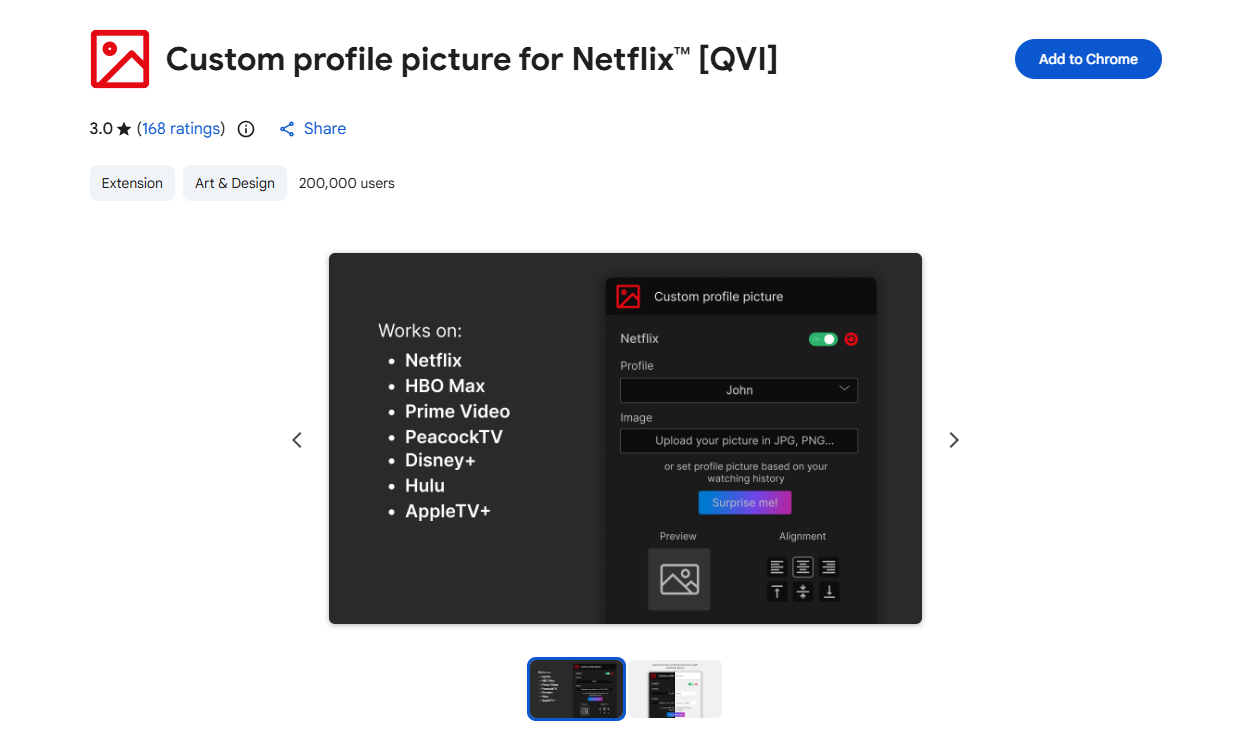
Custom Profile Picture for Netflix (200K users)
Hulu Ad Skipper (100K)
Netflix Picture in Picture (100K)
Ad Skipper for Prime Video (60K)
Netflix Extended (60K)
Across all 21 live extensions, the network reaches nearly 800,000 users.
Figure 2. Extension Page in Chrome Store for the “Custom profile picture for Netflix [QVI]” extension
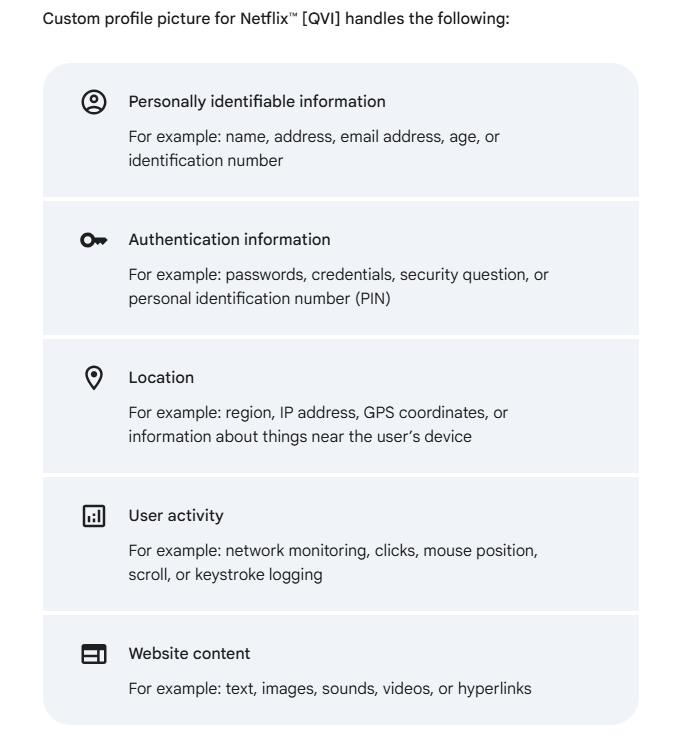
But their privacy policy says something the store listings don’t. These extensions collect extensive information, including:
Viewing history
Content preferences
Platform subscriptions
Downloaded content
Streaming behavior
They also collect age and gender – and if you don’t provide demographics, they match your email against third-party demographic databases to fill in the gaps.
Figure 3. Data declared as collected by the privacy policy of the “Custom profile picture for Netflix [QVI]” extension
The policy describes selling reports to content creators and studios, streaming platforms, media research firms, and marketing agencies – along with “organizations that purchase anonymized viewing data.”
Put it all together and you’re looking at a distributed audience-measurement system running inside users’ browsers. One anonymous publisher pulling viewing behavior across every major streaming platform, building intelligence about what nearly 800,000 people watch, when, and how they engage with content. None of those users signed up for that. Legally, they accepted the terms when they clicked “Add to Chrome.” Practically, nobody read them.
Ad Blockers That Block Some Ads, And Sell Your Data to Other Ads
We confirmed eight ad blockers that reserve the right to sell or share user information with third parties. Tools people install to stop tracking – selling tracking data instead. Combined, they reach over 5.5 million users.
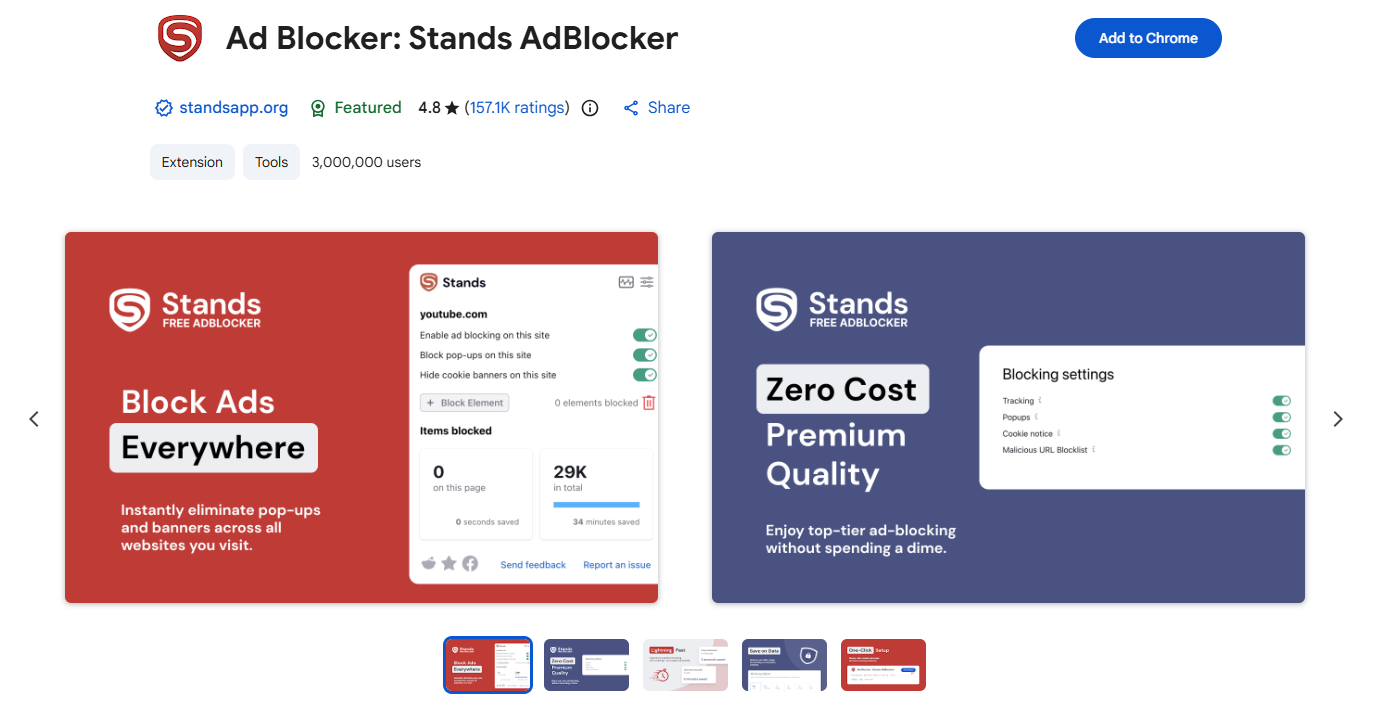
Stands AdBlocker (3M users) sells browsing data to third parties for “market analytics purposes.”
Poper Blocker (2M users) discloses selling identifiers, browsing activity, behavioral profiles, and inferred sensitive data – including health conditions, religious beliefs, and sexual orientation, all inferred from the URLs you visit.
All Block, an ad blocker for YouTube (500K users), sells anonymized data “for analytical and commercial purposes.” Published by an entity called Curly Doggo Limited, based in London.
TwiBlocker (80K users) discloses transferring browsing data to third parties who “process or sell it for analytical purposes.”
Urban AdBlocker (10K users) routes browsing data and AI conversations through the BiScience data broker.
If your ad blocker has a privacy policy longer than two paragraphs, read it.
Figure 4. Featured Ad Blocker in Chrome Store
Independent Operators Can Also Sell Your Data
These aren’t the biggest extensions on the list, but they show how far the data-selling model reaches.
Career.io Job Auto Apply (10K users) states in its policy that it may use personal data collected from your resume to sell to third parties, including data brokers, for targeted advertising and profiling. A job application tool that sells your resume.
Dog Cuties (6K users) is a cute dog wallpaper new-tab extension. Confirmed data seller through the Apex Media network.
EmailOnDeck (10K users) is a temporary email service – a tool people use specifically when they don’t want to share their real information. Its policy states it may sell, rent, or share its mailing list.
Survey Junkie discloses selling URLs visited, clickstream data, and “modeled information” about consumer preferences to market research agencies, ad agencies, and data analytics providers.
Dashy New Tab (10K users) has its Chrome Web Store listing marked “does not sell your data.” Its actual privacy policy marks data as “Sold or Shared: Yes.” We believe this is CCPA compliance language for standard analytics, not commercial data sales – which is why we left it out. But the contradiction between the store listing and the privacy policy is real. If a publisher’s own policy says “Sold or Shared: Yes” and the store listing says the opposite, which one should users trust?
When Your Employees’ Extensions Are Selling Data
Of the 82 confirmed sellers, 29 of them are B2B sales intelligence tools. Their business is data, so the disclosure itself isn’t a surprise. We’re not counting them alongside the consumer-facing extensions.
But they belong in this conversation. These extensions sit on corporate machines. This means that employee browsing behavior, such as internal URLs, SaaS dashboards, and research activity, flows into commercial databases that your competitors can purchase. The risk isn’t about users being deceived. It’s about corporate data leaving through a channel nobody is watching.
What Security Teams Should Do About This
Most extension security evaluations focus on permissions or known malicious indicators – flagging extensions that request excessive access or match threat intelligence. That catches malware. It doesn’t catch an extension that openly reserves the right to sell your browsing data.
An extension with a data-selling disclosure isn’t a hypothetical risk. It’s a stated business practice, sitting in a document your employees accepted without reading.
Three questions worth asking:
What extensions are installed across employee browsers?
What data do those publishers claim the right to collect or sell?
Could corporate browsing activity be flowing into commercial datasets?
Most browsers already support centralized extension management through enterprise policies – Chrome’s ExtensionSettings, Edge’s group policies, Firefox’s enterprise configurations. If you don’t have an extension governance policy, that’s the first step. If you do, add privacy policy review to the evaluation criteria. Permissions alone don’t tell you enough.
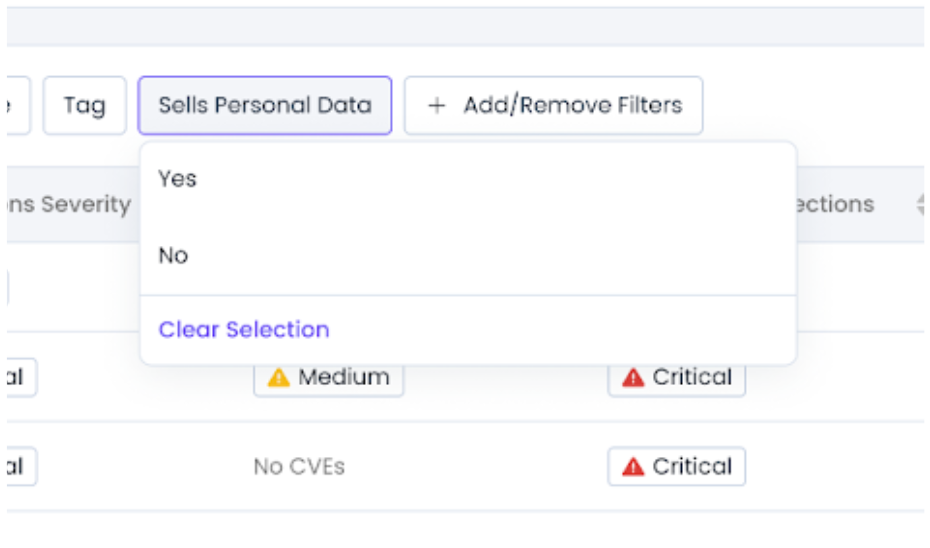
To that end, LayerX added a new filter to detect and filter (and block, if so desired) extensions that either don’t have a privacy policy at all, or reserve the right to sell personal data.
Consider blocking extensions that either disclose selling user data or don’t publish a privacy policy at all.
Figure 5. LayerX Extension Data Privacy Filter
The Bottom Line
Browser extensions are among the web’s most powerful and least scrutinized tools. While much of the focus is on malicious that actively steal user and corporate data, privacy violations may sound mundane, but can also be risky.
Going through and reading the Privacy Policy of every extension that every user has in your organization can lead to hundreds or thousands of individual extensions; clearly, that’s not feasible.
Instead, organizations need to start deploying automated tools that can restrict suspicious extensions and account for privacy settings.
Dar Kahllon & Guy Erez Published - April 26, 2026
Share:
This isn’t a story about malware. Nobody hacked you. Nobody stole anything. The extensions you’re running right now may be selling your browsing data — and they told you they would. It’s right there in the privacy policy. Page 4. Paragraph 7. The one nobody reads.